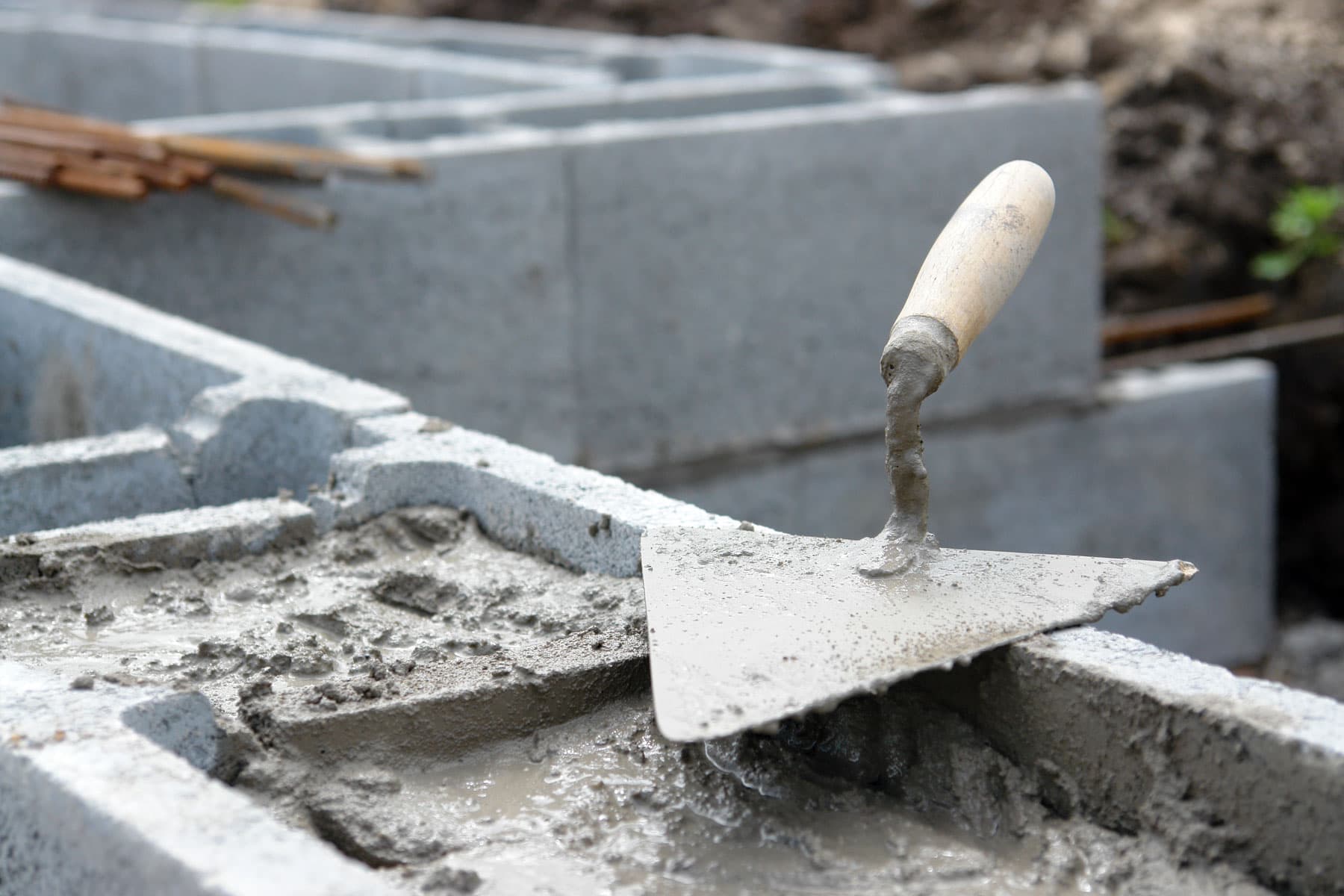
Drive around any older Lower Mainland neighbourhood with slopes — and there are a lot of them — and you'll see leaning, bulging, and crumbling retaining walls everywhere. Timber walls rotting out, rock walls sliding apart, block walls tilting toward the street. Almost none of those walls failed because of the blocks. They failed because of what's behind and beneath them.
If you're considering a wall, understanding why they fail tells you exactly what to insist on when you build one.
A Retaining Wall Holds Back More Than Soil
Here's the part most people don't realize: a retaining wall isn't really fighting the weight of the dirt. It's fighting water. Saturated soil is enormously heavy and pushes against a wall with far more force than dry soil. In our climate, where the ground stays wet for months, water management isn't a detail — it's the entire job.
Every common failure traces back to water, drainage, or base prep:
- Leaning or tilting — the base wasn't deep or compacted enough, so the wall settled and rotated forward.
- Bulging in the middle — water built up behind the wall with nowhere to go, and the pressure pushed it out.
- Cracking and separation — frost and hydraulic pressure working on a wall that had no drainage.
- Rotted timber / rusted ties — the wrong material for a wet climate, with a built-in expiry date.
What a Wall Built to Last Actually Has
A good retaining wall is mostly invisible. The part you see — the block or stone — is the easy bit. The longevity is in the things you can't see once the job is done.
A deep, compacted gravel base
This is the single biggest factor. The wall needs to sit on a thick, well-compacted granular base, not on soil. Skimp here and the wall settles unevenly and starts to lean — guaranteed, just a question of when.
Drainage behind the wall
A proper wall has drainage rock behind it and a perforated drain pipe (drain tile) at the base to carry water away. This relieves the hydraulic pressure that destroys walls. No drainage = the wall is holding back wet soil at full weight, every winter.
Geogrid reinforcement on taller walls
Once a wall passes a certain height, it needs geogrid — layers of reinforcing mesh that extend back into the soil and tie the whole hillside and wall together as one mass. This is what keeps a taller wall from rotating out.
The right engineering for the height
In BC, walls past a certain height legally require an engineer. A good contractor tells you when your project crosses that line instead of building something that won't pass — or won't last.
You can see how we build retaining walls with each of these steps as standard, not as upgrades.
Block, Stone, or Boulder?
All three can make an excellent wall — the choice is about look, height, and budget:
- Segmental block (Allan Block style): the workhorse. Engineered, consistent, handles height well with geogrid, and cost-effective. Best for most functional walls.
- Natural stone: the premium look. Beautiful and extremely durable when built right, though more labour-intensive.
- Boulder walls: great for a rugged, natural look on the right property, especially larger grades.
What you want to avoid is the timber/railway-tie wall. It looks cheap up front and it is cheap up front — but in our climate it's on a countdown to rotting out and leaning over.
The Bonus: Walls Create Usable Space
A retaining wall isn't only a fix for a problem slope. It's also how you turn an unusable hillside into flat, usable yard. Terracing a slope with a wall (or two) can reclaim a big chunk of property for a lawn, a garden, or a patio. If you're already moving earth, it's often the right time to plan the outdoor space that sits above or below it.
The Bottom Line
If you remember one thing: judge a retaining wall by its base and its drainage, not its blocks. Any wall looks good the day it's finished. The one that still looks good in fifteen years is the one that was built on a deep compacted base, with drainage behind it, and reinforcement where the height called for it.
We build walls to hold across Surrey, Langley, the Tri-Cities and the rest of the Lower Mainland, and we'll tell you honestly whether your project needs an engineer. Get a free on-site assessment.